


Bienes Raices en R.D. Seguridad
Wednesday, 22 April 2026
1. What is a Real Estate Agent? 🏠
A real estate agent is a professional who acts as an intermediary in the purchase, sale, or rental of properties. Their role is not just to connect parties, but to advise to ensure the transaction is safe, legal, and financially viable.
📚 Essential Knowledge:
- Laws and Regulations: Property rights, contracts, real estate taxes, and leasing laws.
- Finance and Valuation: Market analysis, fair pricing, mortgage options, and ROI.
- Marketing and Sales: Negotiation techniques, digital advertising, and Customer Relationship Management (CRM).
- Urban Planning: Zoning knowledge, building permits, and local infrastructure development.
2. International Recognition and Regulation 🌍
The profession is most recognized and regulated in mature markets:
- Top Countries: United States, Canada, Australia, United Kingdom, and Spain.
- Licensing Systems: In the US (Real Estate Commission), Canada (RECO), and Panama, mandatory training and state exams are required.
3. The Quality Seal: NAR, Realtor, and CRS 🏆
What is NAR International? The National Association of Realtors (NAR) is the world's largest professional association; it defines global ethical standards.
When is an agent a REALTOR®? Only if they are an active member of the NAR and adhere to a strict Code of Ethics.
What does it mean to be a CRS agent? The Certified Residential Specialist is the highest credential in the residential sector, held by only 3% of agents worldwide.
4. The Attorney-Agent in the Dominican Republic 🇩🇴⚖️
In a dynamic market that is also vulnerable to scams, an Attorney specializing in real estate offers critical advantages:
- Due Diligence: Deep investigation within the Land Registry (Registro de Títulos).
- Identity Verification: Detection of fraudulent powers of attorney or forged documents.
- Contractual Security: Drafting customized clauses that protect your capital against builder defaults.
- Trust Management (Fideicomiso): Expert advice on Law 189-11 regarding trusts.
- Scam Protection: A legal license (Exequatur) acts as a guarantee of professional and civil liability toward the client.
💡 Key Fact: If you are going to invest in the DR, an agent who is also an attorney is your best "insurance policy" against fraud.
⚠️ The Danger of Informality: A Systemic Risk
Informality in the Dominican Republic represents a threat to national and economic security. Professionalization is urgent due to:
- Protection Against Fraud: It allows for a track record of civil liability.
- Anti-Money Laundering (Law 155-17): Strict compliance with due diligence forms.
- Professional Ethics: Prevents "commission-first" behavior and ensures loyalty to the client.
- International Investor Confidence: Elevates the "Country Brand" to attract larger capital.
📊 Benefits of Mandatory Technical Training
| Area of Knowledge | Impact on the Client |
|---|---|
| Real Estate Law | Avoids properties with land litigation or boundary issues. |
| Confotur Law | Allows for 3% transfer tax exemption and 0% IPI for 15 years. |
| Trusts (Fideicomiso) | Ensures funds are managed by a fiduciary and not directly by the builder. |
| Market Valuation | Prevents the buyer from overpaying or the seller from losing money. |
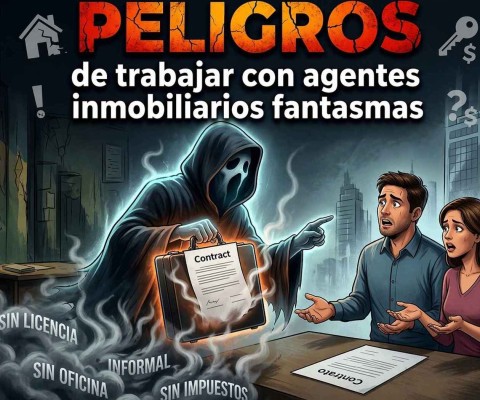
🚫 The Dangers of Working with "Ghost Agents"
Working with agents without an office, without training, and who do not pay taxes is like walking through a financial minefield:
- Legal Defenselessness: Impossibility of locating the agent for legal claims.
- Banking Risk: Fund freezes by banks due to lack of professional compliance documentation.
- Construction Defects: "One-sided" contracts that favor the builder, leaving the buyer without warranties.
📉 Risk Summary
| Agent Characteristic | Primary Risk to Client |
|---|---|
| No Training | Financial loss and legal complications. |
| No Office | Impossible to serve legal notice or file physical claims. |
| Informal/No Taxes | Lack of corporate backing and risks related to Law 155-17. |